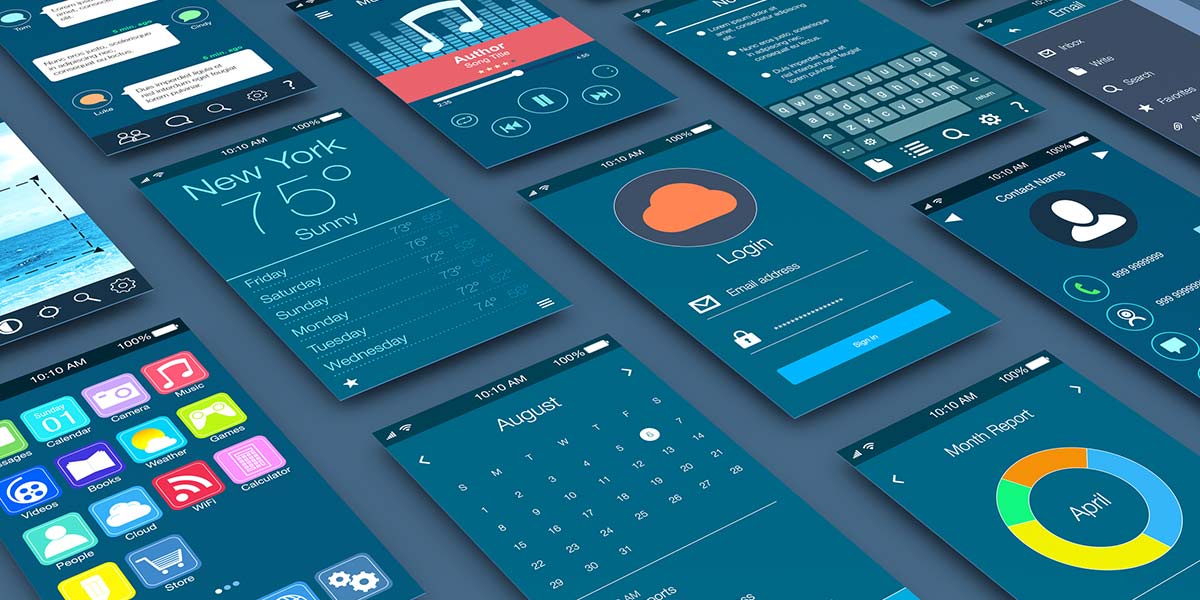
On this planet of modern software package, person experience no longer life only on screens. Significantly, it resides during the invisible connections in between techniques—Individuals streams of information and commands that make digital ecosystems perform. These connections are made achievable by APIs (Application Programming Interfaces), which have evolved from technical tools for developers into the new frontiers of user conversation. Now, APIs are the unseen interfaces shaping how users experience technologies, even once they by no means touch a button. I'm Gustavo Woltmann, developer with twenty yr expertise, let's Verify how meaninghul APIs are today.
From Screens to Systems
For many years, consumer interfaces have been defined by what users could see and contact—buttons, icons, menus, and screens. The artwork of consumer expertise revolved about making these Visible levels intuitive and beautiful. But as electronic ecosystems expanded, a silent revolution commenced beneath the surface area. The most crucial interactions were now not occurring among humans and screens, but concerning apps and methods.
Enter the API—Software Programming Interface—the invisible backbone of modern program. As an alternative to guiding human clicks, APIs define how units converse. They allow applications to share knowledge, set off steps, and coordinate sophisticated tasks mechanically. On this new reality, the boundaries amongst platforms blur: your ride-sharing application connects in your map company, your climate widget pulls data from the meteorological server, and your Exercise tracker syncs seamlessly along with your phone.
This driving-the-scenes connectivity has quietly redefined what “user knowledge” means. Even though users interact by way of a graphical interface, the legitimate knowledge normally is dependent upon how perfectly APIs exchange facts within the qualifications. A flawless transaction, prompt update, or actual-time notification transpires simply because APIs are Doing work perfectly with each other.
Due to this fact, modern computer software enhancement is shifting its priorities. The visual layer—the display—continues to be significant, but it’s not The full Tale. The standard of the experience now depends equally about the invisible architecture that powers it. Enterprises that when focused solely on UI design and style are actually investing intensely in API style, recognizing that reliability, pace, and integration generate buyer pleasure about aesthetic enchantment.
From screens to systems, technologies has started to become considerably less about what we see and more details on how anything connects. The way forward for consumer practical experience is not simply Visible—it’s structural, seamless, and driven with the tranquil intelligence of APIs Performing guiding just about every faucet, click on, and swipe.
APIs as Invisible UX
In right now’s linked digital globe, essentially the most seamless user experiences often materialize without the need of buyers noticing it. Guiding every single quick login, a single-click payment, or real-time update lies a community of APIs—the unseen interfaces that form how engineering feels. Whilst traditional structure concentrates on what end users can see, API design and style determines how effortlessly anything performs.
APIs have grown to be the invisible layer of person practical experience, orchestrating interactions across platforms and devices. Once your social networking application promptly pulls your photographs from the cloud or your banking application syncs properly with your budgeting software package, you’re benefiting from thoughtful API structure. The responsiveness, dependability, and consistency of People connections define the general encounter about visual design or navigation at any time could.
Poorly made APIs, However, can crack that illusion of effortlessness. A slow integration, mismatched facts, or method failure results in friction much like a buggy interface would. That’s why quite a few major providers now deal with APIs as Main UX components, not simply backend applications. Their design and style will have to prioritize clarity, predictability, and balance—traits that make sure builders can build reputable features, and consumers can love flawless efficiency.
For contemporary builders, crafting an excellent API is undoubtedly an act of person-centered style—only the “people” are often other developers. Thorough documentation, dependable endpoints, and intuitive logic make APIs easier to adopt and integrate, fostering superior end-user encounters.
In this way, APIs have redefined what this means to style and design for usability. They turn interactions into fluid, connected encounters that transcend screens. As programs go on to speak more straight with each other, APIs are emerging as the new frontier of UX—one particular wherever the most stunning interface could be the a single end users under no circumstances see.
The Increase with the API-To start with Environment
In the past, software program was constructed With all the user interface initial—a display, a menu, a visual layout—while the underlying systems arrived afterwards. Now, that get has flipped. We now are in an API-initially earth, the place apps are created from the inside out, beginning with the info and logic that travel just about every conversation.
An API-very first strategy indicates developers get started by defining how devices converse just before they even Develop the user-struggling with levels. This attitude ensures that every company—no matter if it’s authentication, payment processing, or analytics—might be reused, scaled, and integrated throughout a number of platforms. As opposed to creating for only one interface, corporations design and style for an ecosystem of connections.
The result is agility and interoperability. Modern-day organizations operate throughout gadgets, cloud services, and 3rd-celebration integrations, and APIs make that complexity workable. They allow startups to plug into world infrastructures like Stripe, Google Maps, or OpenAI in hours in place of months. This accelerates innovation and amounts the participating in discipline, enabling small groups to build subtle items that rival organization computer software.
For corporations, the shift to API-to start with design and style isn’t just technological—it’s strategic. It encourages modular architecture, constant supply, and less difficult collaboration concerning teams. APIs develop into the contract of conversation concerning inner devices and exterior partners, giving stability in an at any time-changing digital landscape.
In a very world driven by automation and connectivity, APIs are no more an afterthought—they’re the muse. They electrical power anything from logistics networks to smart properties, reworking how program is constructed, preserved, and professional. The rise in the API-1st environment represents a basic adjust in how technological know-how evolves: less about screens and clicks, and more about how each and every process talks, shares, and grows alongside one another.
Collaboration, Automation, and the New UX
As APIs consider Middle stage in present day software package, they’re not merely enabling technology—they’re reshaping how individuals and techniques collaborate. In an API-driven ecosystem, collaboration extends past teams and equipment for the quite architecture of electronic solutions. APIs act given that the bridges concerning services, automating workflows and creating experiences that feel effortlessly related.
Give thought to how today’s efficiency applications do the job: your calendar syncs with the movie conferencing application, your messages bring about undertaking updates, as well as your files are automatically backed up throughout platforms. None of the takes place manually—it’s driven by APIs Operating quietly in the history. This invisible collaboration presents rise to a fresh kind of person practical experience, one that values automation and integration more than traditional interface structure.
For builders and solution teams, APIs also redefine collaboration internally. In lieu of siloed programs, teams work from the shared foundation of reusable factors. Designers, engineers, and analysts can Create and refine items simultaneously, working with APIs since the connective tissue that keeps anything aligned and steady. This modular approach hurries up iteration, decreases redundancy, and tends to make products and solutions far more adaptable to change.
With the user’s point of view, the most effective electronic encounters are the ones that read more anticipate requires and remove friction. APIs make that probable by enabling actual-time data circulation and automation—whether or not it’s clever recommendations, fast payments, or contextual notifications.
Within the period of collaborative automation, the user knowledge is no longer confined into a monitor or just one software. It life inside the seamless coordination concerning methods. APIs tend to be the unseen collaborators, empowering humans and devices to work in sync. The brand new UX is not nearly building interfaces—it’s about creating interactions amongst ecosystems, where automation and collaboration outline what “consumer-welcoming” really signifies.
Building the Future of Invisible Interfaces
As APIs proceed to weave jointly the electronic world, They may be paving how for just a long term in which interfaces may well vanish completely. The next generation of user knowledge gained’t trust in screens or buttons—it will depend on seamless, context-conscious interactions manufactured attainable by clever, interconnected units run by APIs.
Invisible interfaces are now here in subtle forms: a voice command that orders groceries, a smartwatch that adjusts your thermostat, or an app that suggests the very best route before you even inquire. These encounters are developed not on standard design and style aspects but on knowledge circulation, automation, and integration—all orchestrated by way of APIs.
Planning for this foreseeable future needs a shift in pondering. Rather than focusing on what users see, designers and builders will have to take into consideration how units fully grasp and reply. The emphasis moves from visual layout to behavioral logic—crafting interactions that are anticipatory, natural, and trusted. Prosperous API layout will copyright on clarity, safety, and adaptability, ensuring that invisible interactions remain responsible and respectful of person intent.
This shift also redefines creativity in technology. The designers of tomorrow will condition ecosystems, not only experiences. They’ll have to have to consider how various services, sensors, and facts sources collaborate to form a unified, human-centered procedure.
In this particular globe, APIs become the architects of invisibility. They empower frictionless, predictive encounters where by the interface fades absent and also the conversation itself results in being the merchandise. As we move towards ambient computing, intelligent environments, and AI-pushed personalization, the future of person encounter received’t be what we touch—It will probably be what seamlessly takes place for us, run through the silent design of APIs.
Conclusion: The Silent Electrical power At the rear of the Display
APIs have redefined what this means to interact with know-how. They may not have buttons or shades, but they form how electronic experiences come to feel—sleek, connected, and rapid. In an progressively interconnected environment, the API is not merely a developer’s tool. It’s the new consumer interface, quietly reworking how we Reside, operate, and join inside the electronic age.